
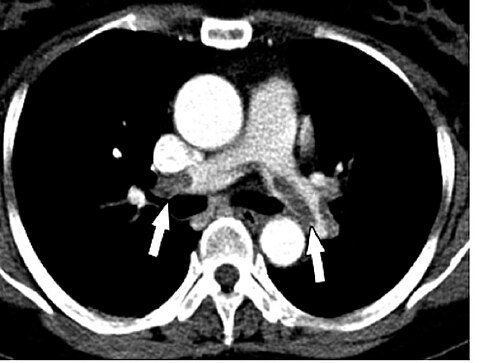
Pulmonary Embolism
PulmonologyOverview
Pulmonary embolism is a group of conditions in which emboli block the pulmonary artery or its branches, causing pulmonary circulation and respiratory dysfunction. Symptoms include shortness of breath, chest pain on inhalation, and coughing up blood, and severe cases may cause fainting, shock, or sudden death. It is often caused by a blood clot traveling from the lower limbs.
Symptoms
- Sudden shortness of breath
- Chest pain
- Coughing up blood
- Palpitations
- Fainting
Treatment
An acute and serious condition requiring immediate medical attention. Once confirmed, anticoagulation is the core treatment; critically ill patients may need thrombolysis or interventional therapy, along with management of underlying causes such as deep vein thrombosis.
Dietary advice
While taking anticoagulants, keep the diet light and balanced and maintain a steady intake of vitamin K-rich foods to avoid affecting drug efficacy. Drink plenty of water and avoid prolonged sitting.