
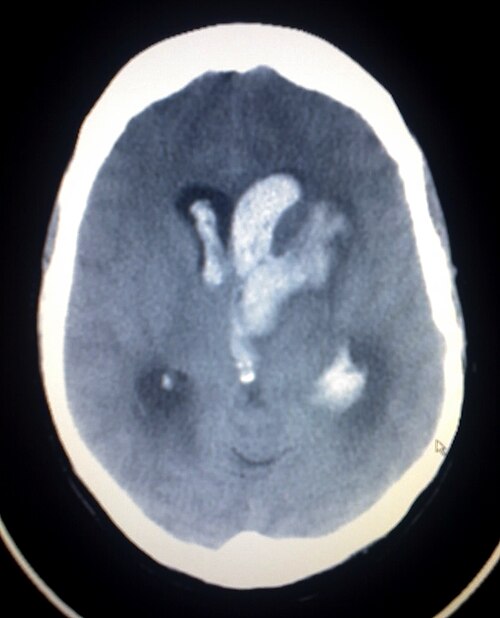
Cerebral Hemorrhage
NeurologyOverview
Cerebral hemorrhage (intracerebral hemorrhage) is sudden bleeding into the brain tissue, ventricles, or both, a type of hemorrhagic stroke. The most common risk factors for spontaneous bleeding are hypertension and amyloid angiopathy.
Symptoms
- Severe headache
- Vomiting
- Hemiplegia
- Impaired consciousness
- Slurred speech
Treatment
In the acute phase control blood pressure and reduce intracranial pressure, evacuate large hematomas surgically, and provide rehabilitation later.
Dietary advice
Eat a bland, low-salt diet, keep bowel movements regular, and avoid irritating foods.