
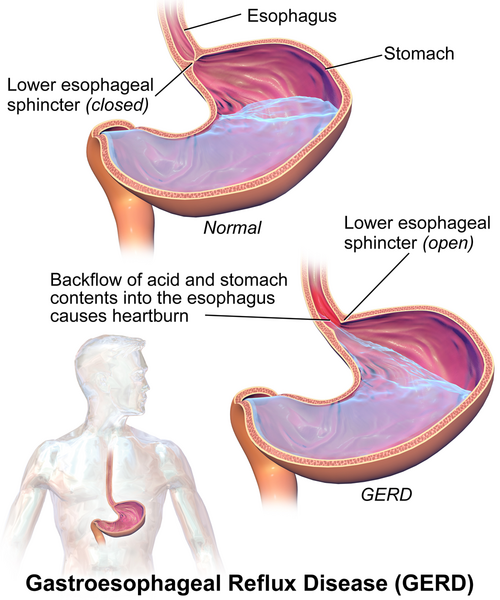
Gastroesophageal Reflux Disease
GastroenterologyOverview
Gastroesophageal reflux disease (GERD) is a condition in which stomach acid and contents abnormally reflux upward into the esophagus over the long term, often with lower esophageal sphincter dysfunction and mucosal damage from chronic acid reflux.
Symptoms
- Acid reflux
- Heartburn
- Retrosternal burning pain
- Belching
- Foreign body sensation in throat
Treatment
Treatment is based on lifestyle adjustments such as weight loss, raising the head of the bed, and not eating before bedtime, along with acid-suppressing drugs. Patients with refractory symptoms should seek medical evaluation, with further testing or surgery when necessary.
Dietary advice
Eat small, frequent meals and avoid overeating, and do not lie down immediately after meals. Reduce high-fat, spicy, and overly sweet foods as well as coffee, strong tea, alcohol, and carbonated drinks.